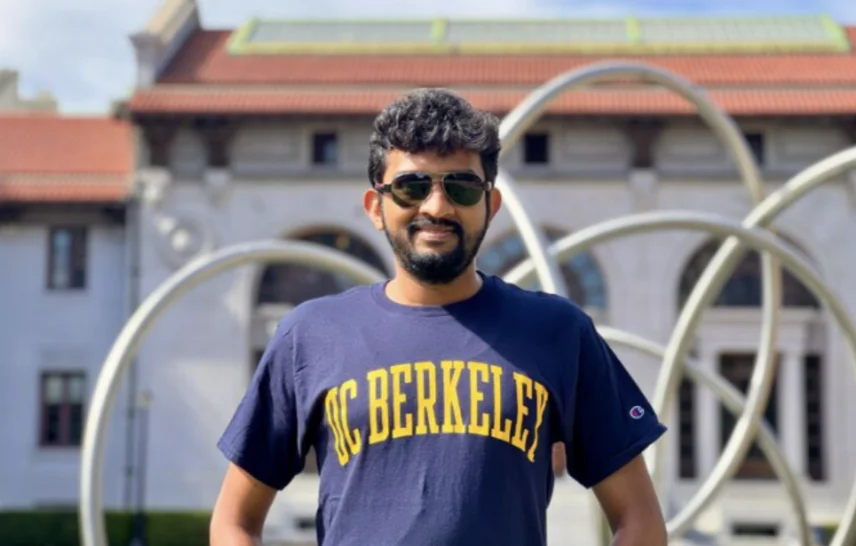
A new research role at UC Berkeley
Deepak Krishnamurthy will lead a research laboratory focused on marine microorganisms at UC Berkeley.
The work will seek to better understand the role of microscopic organisms in ocean ecosystems. Although microbes are invisible to the naked eye, they influence some of the most important biological and chemical processes taking place in the ocean.
Bacteria, archaea and other microorganisms contribute to nutrient cycling, carbon processing and marine productivity, making them an important part of the global ecosystem.
Understanding the hidden world of ocean microbes
Marine microbes perform a wide range of functions that help sustain ocean ecosystems.
They break down organic matter, recycle nutrients and transform carbon between different chemical forms. These processes also influence the organisms that sit higher in the marine food chain.
Research under Krishnamurthy's leadership will seek to understand the metabolism of these microorganisms, their interactions with one another and the ways their communities respond to changing ocean conditions.
Climate change adds urgency to the research
Rising temperatures, changes in ocean chemistry and shifts in oxygen levels are affecting marine environments around the world.
Scientists are increasingly interested in understanding how microbial communities respond to these changes and whether alterations in microbial activity could affect the global carbon cycle.
Studying these relationships could provide valuable insights into how marine ecosystems may evolve as environmental conditions continue to change.
Advanced technologies for microbial research
Modern ocean microbiology increasingly relies on technologies such as genomic sequencing, metagenomics, bioinformatics, advanced imaging and computational analysis.
These tools allow scientists to examine genetic information from enormous numbers of microorganisms and identify biological processes that would otherwise remain difficult to observe.
Combining laboratory research with computational and genomic approaches could help reveal how microbial communities function as interconnected ecosystems.
Recognition for an Indian-origin scientist
Krishnamurthy's appointment adds another notable achievement to the career of an Indian-origin scientist working in advanced biological research.
Leading a research laboratory at UC Berkeley provides an opportunity to develop new approaches to understanding marine microorganisms and their role in broader environmental systems.
His work could also contribute to a growing body of research examining the relationship between microscopic biological processes and large-scale changes in Earth's climate and ecosystems.
Why ocean microbes matter
The importance of marine microbes extends far beyond microbiology itself. Their activity affects nutrient availability, carbon movement and the productivity of marine ecosystems.
Because oceans play a major role in regulating Earth's climate, understanding microbial processes can provide scientists with a clearer picture of how carbon and other elements move through the environment.
Research in this area could therefore have implications for both fundamental biology and climate science.
Conclusion
Marine microorganisms are among the most influential yet least visible components of Earth's ecosystems. Research led by Deepak Krishnamurthy at UC Berkeley aims to deepen scientific understanding of these organisms and their relationship with changing ocean environments.
By combining modern genomic, computational and biological approaches, the research could shed new light on microbial metabolism, carbon cycling and the future of marine ecosystems in a changing climate.