


India’s Opportunity as a China Alternative
Global companies are increasingly looking to diversify supply chains, creating an opportunity for India to expand its manufacturing footprint. According to Minda, BRICS cooperation could help Indian businesses strengthen technology capabilities and build more competitive production systems.
The objective is not simply to replace Chinese manufacturing overnight, but to develop resilient and diversified supply chains in areas where India can become globally competitive.
Semiconductor Push Gains Momentum
India is investing heavily in building a domestic semiconductor ecosystem. As of July 2026, 12 semiconductor projects involving committed investments of more than Rs 1.64 lakh crore had been approved under the government’s semiconductor programme, with three facilities already beginning commercial production.
Semiconductors are increasingly important for electric vehicles, electronics, telecommunications, defence and automobiles. Building domestic capabilities could therefore strengthen India’s broader advanced-manufacturing ecosystem.
Building a Stronger EV Supply Chain
India is also pushing for greater localisation in electric vehicle manufacturing. The Production Linked Incentive scheme for automobiles and auto components is designed to promote manufacturing of advanced automotive technology products, including EV-related technologies.
As of March 31, 2026, approved companies had reported Rs 44,326 crore in investments under the scheme, exceeding the target of Rs 42,500 crore for that stage.
However, India continues to rely on imports for several high-value EV inputs, including battery cells, advanced power electronics and certain critical materials. Closing these gaps will be important if India wants to move beyond assembly and become a major exporter of high-value EV products.
BRICS Can Support Technology and Raw Materials
BRICS cooperation could provide opportunities beyond conventional trade. Technology partnerships, raw-material access, manufacturing collaboration and digital trade infrastructure could all contribute to strengthening India’s industrial base.
For the EV sector in particular, cooperation in batteries, critical minerals, power electronics and semiconductor technologies could help Indian manufacturers reduce supply-chain vulnerabilities.
Focus on Export Competitiveness
Building manufacturing capacity is only one part of the challenge. India will also need to produce globally competitive products at attractive costs and expand its presence in international markets.
EVs, auto components, electronics and engineering products could become important areas for export growth. BRICS economies could provide additional markets for Indian manufacturers as trade links deepen.
The Challenge of Competing With China
Becoming a credible alternative to China will not be easy. China has highly integrated manufacturing networks and significant advantages in batteries, EV components, critical minerals processing and large-scale production.
India therefore needs to strengthen capabilities beyond final assembly. Research and development, product design, battery technology, advanced machinery and high-value components will all be critical to moving up the global value chain.
BRICS Summit Adds Significance
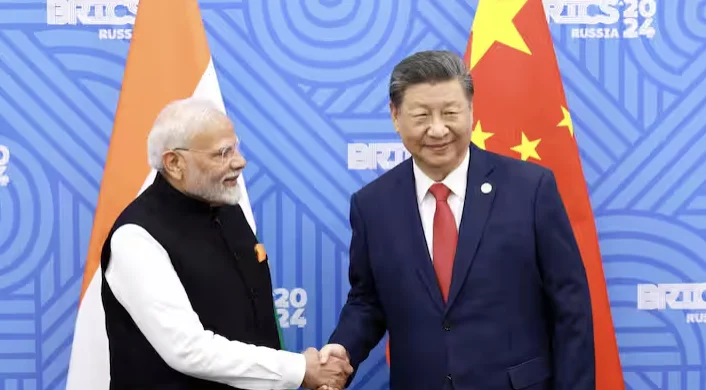
Minda’s comments come ahead of the 18th BRICS Summit, scheduled to be held in New Delhi on September 12-13. With India hosting the summit, manufacturing, technology, trade and supply-chain cooperation are likely to remain important areas of discussion.
The BRICS platform could give India an opportunity to deepen economic partnerships while simultaneously strengthening its domestic industrial capabilities.
Conclusion
India’s ambition to emerge as a China alternative in advanced manufacturing and EVs will depend on a combination of domestic investment and international cooperation. By using BRICS partnerships to improve access to technology, raw materials, capital and markets, India could strengthen its position in the global EV and advanced-manufacturing supply chain.