


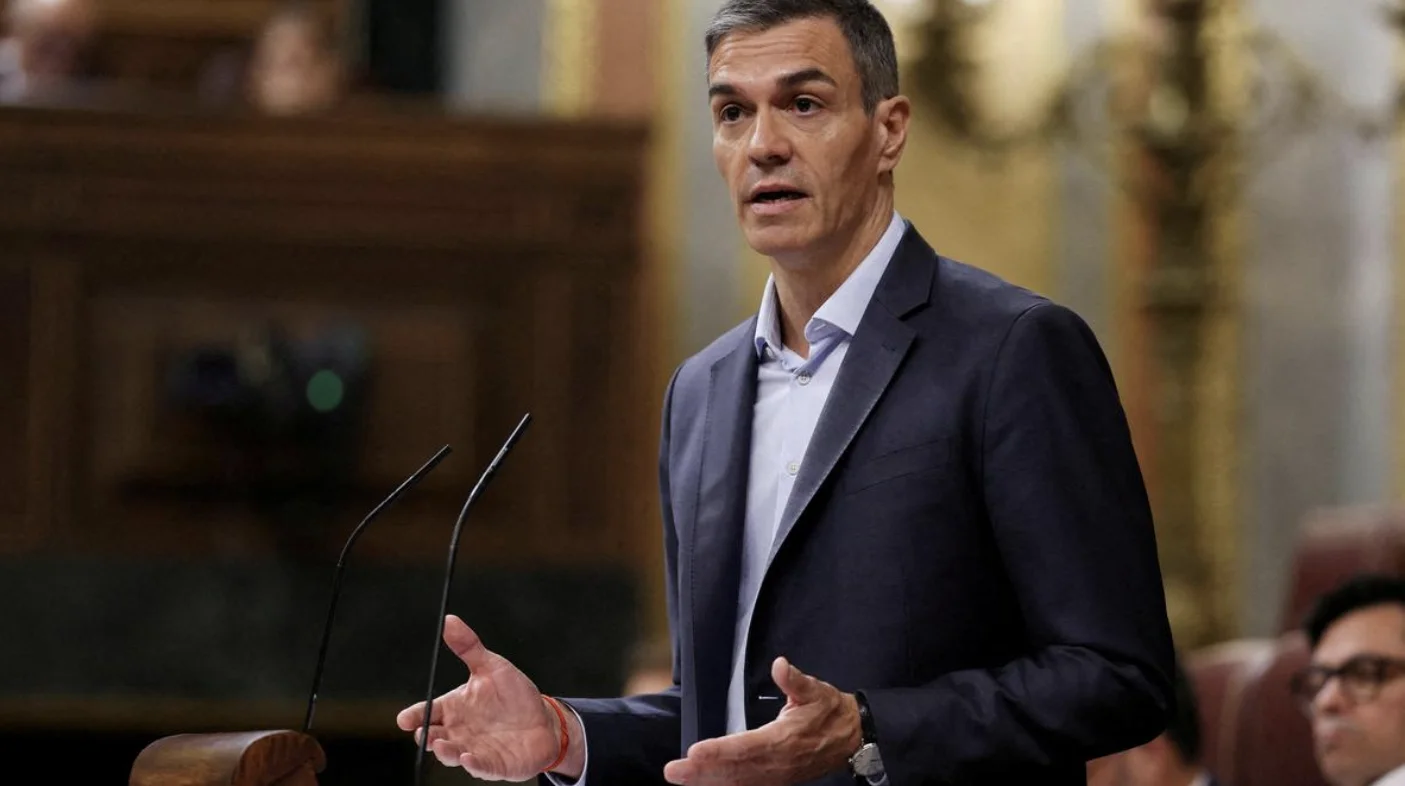
Spanish Prime Minister Pedro Sanchez has accused networks linked to Russia and Israel, along with international far-right groups, of spreading disinformation that helped fuel the mass migrant crisis in Ceuta in late July.
Sanchez said the claims were circulated through social media and cited research by the European Union’s diplomatic service, the EEAS, as an indication of the networks involved.
What Happened in Ceuta?
More than 72,000 migrants crossed irregularly from Morocco into Ceuta between July 30 and 31 in an unprecedented surge.
Many attempted to reach the Spanish territory by swimming around the border fence or through other routes. At least 100 people died during the attempted crossing, according to local authorities.
False Claims Spread on Social Media
Spanish authorities said misleading claims circulated on Instagram, TikTok and other social media platforms.
One of the claims suggested that migrants who reached Ceuta by sea could not be immediately returned to Morocco. The misinformation encouraged thousands of people to attempt the crossing.
Allegations Against Russia and Israel
Sanchez said research by the EEAS indicated that Russian- and Israeli-linked networks had helped spread the disinformation, working alongside international far-right networks.
He argued that Russia and Israel had political reasons to exploit the crisis because of disagreements with Madrid over Spain’s positions on the wars in Ukraine and Gaza.
However, Sanchez did not publicly provide detailed evidence supporting the allegations.
Sanchez Rules Out Moroccan Involvement
Spanish opposition parties and some human rights groups have accused Morocco of deliberately allowing the mass crossing.
Sanchez rejected those claims, saying Spanish security and intelligence agencies had found no information pointing to Moroccan authorities being involved in the influx.
He also stressed that continued cooperation with Morocco was necessary to resolve the crisis.
Israel Rejects the Allegations
Israel has strongly rejected Sanchez’s accusations.
Israeli Foreign Minister Gideon Sa’ar accused the Spanish prime minister of making the allegations to divert attention from domestic political problems.
The Russian Embassy in Spain and the EEAS had not immediately responded to requests for comment at the time of the reports.
Thousands Remain in Ceuta
Although the overwhelming majority of migrants who entered Ceuta during the crisis later returned to Morocco, thousands remain in the Spanish territory.
The Spanish government estimates that between 3,500 and 7,000 migrants remain, including unaccompanied minors. Local right-wing politicians have claimed the number could be considerably higher.
Tensions Among Local Residents
The migrant influx has triggered repeated protests in Ceuta.
Residents have raised concerns about security, hygiene and the conditions around temporary migrant camps. Police have also reported sporadic incidents involving people staying in or near makeshift camps.
Additional Funding for Ceuta
Sanchez announced an additional €168 million in emergency funding to help revive Ceuta’s economy and address the consequences of the crisis.
The new funding comes on top of €180 million previously pledged for medium-term recovery measures.
Wider European Implications
The Ceuta crisis has intensified debate across the European Union over migration, border security and the role of disinformation in encouraging irregular migration.
The episode has also raised concerns about the use of social media campaigns and foreign influence to exploit migration-related tensions for political purposes.
Investigation Continues
Sanchez has stressed that the investigation into the origins of the Ceuta crisis is still underway.
While he has pointed to Russian- and Israeli-linked networks, the full extent of their alleged involvement remains an issue for investigators to establish.
Conclusion
Spanish Prime Minister Pedro Sanchez has accused Russia- and Israel-linked networks, together with international far-right groups, of spreading disinformation that contributed to the mass migrant influx into Ceuta.
He cited research by the EU’s diplomatic service but did not publicly provide detailed evidence for the allegations. Israel has rejected the claims, while Sanchez has ruled out Moroccan government involvement.
With thousands of migrants still in Ceuta and tensions continuing among local residents, the crisis remains a major challenge for Spain and the wider European Union. The ongoing investigation is expected to determine the extent to which organised disinformation contributed to the unprecedented migrant movement.