Cancer treatment has undergone several major transformations over the past few decades, moving from chemotherapy to targeted therapies and then to immunotherapy.
Personalised mRNA tumour vaccines could represent the next major step in that evolution. Recent clinical trial results in melanoma have raised hopes that vaccines designed specifically for an individual patient’s tumour could help prevent cancer from returning after surgery.
Evolution of Cancer Treatment
Chemotherapy became a cornerstone of cancer treatment during the 1970s and 1980s, improving survival across several cancers and curing diseases such as Hodgkin’s lymphoma and testicular cancer.
Advances in genome sequencing later enabled targeted therapies aimed at specific molecular abnormalities. Treatments targeting HER2 in breast cancer and EGFR mutations in lung cancer became important examples of precision medicine.
The most significant transformation in recent decades came with immunotherapy, which uses the body’s own immune system to recognise and attack cancer cells.
The Melanoma Trial
The latest excitement around personalised mRNA cancer vaccines comes from the Phase III INTerpath-001 trial.
The study involved about 1,100 patients with high-risk melanoma who had undergone surgery to remove visible cancer.
One group received pembrolizumab alone, while another received pembrolizumab combined with an individualised mRNA vaccine designed using the genetic profile of each patient’s tumour.
A Vaccine Made for Each Patient
The central feature of the approach is personalisation.
Researchers first sequence the patient’s tumour and identify genetic mutations that are unique to the cancer cells. These mutations can produce neoantigens, which can potentially be recognised by the immune system.
Artificial intelligence and advanced computational methods are then used to identify the most promising targets. The information is used to create an mRNA vaccine specifically designed for that patient’s tumour.
How Does It Work?
Unlike conventional vaccines that are primarily designed to prevent infections, therapeutic cancer vaccines are administered after a disease has been diagnosed.
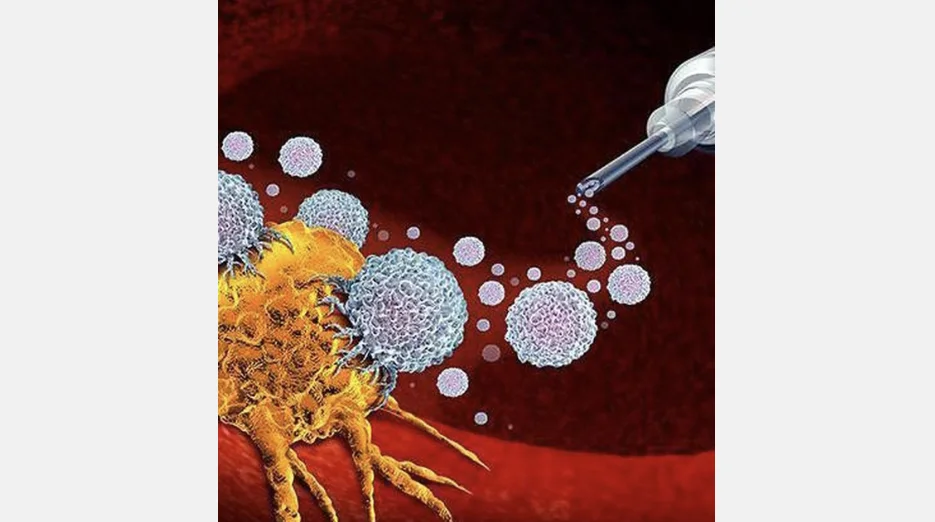
The personalised mRNA vaccine provides instructions that help the immune system recognise tumour-specific targets. T cells can then be trained to identify and attack cancer cells carrying those specific mutations.
The concept is therefore fundamentally different from giving the same vaccine to every patient. Each vaccine is designed around the genetic characteristics of an individual’s cancer.
Why the Trial Results Matter
The combination of the personalised vaccine with immunotherapy significantly improved recurrence-free and distant metastasis-free survival compared with immunotherapy alone.
Earlier studies of the same strategy had also reported substantial reductions in the risk of recurrence or death and in the risk of distant metastasis or death.
The positive findings from a large randomised Phase III trial represent an important milestone for personalised neoantigen-based mRNA therapy.
A New Step Beyond Immunotherapy?
Immunotherapy has already changed cancer care by helping the immune system attack malignant cells.
However, cancer cells can evolve and develop mechanisms that allow them to escape immune surveillance.
Personalised mRNA vaccines could make the immune response more precise by directing it towards mutations specific to an individual tumour.
Rather than replacing existing immunotherapy, the current approach is being developed as a way of strengthening its effectiveness.
Could It Work for Other Cancers?
Melanoma has served as an important testing ground for personalised cancer vaccines because it generally has a high number of mutations and can respond strongly to immune-based treatments.
Researchers are now studying similar approaches in lung, gastrointestinal, genitourinary and several other cancers.
If those studies succeed, cancer treatment could eventually involve sequencing a patient’s tumour after surgery and rapidly producing a personalised vaccine aimed at eliminating microscopic cancer cells that remain in the body.
AI’s Role in Personalised Vaccines
Creating a separate vaccine for every patient requires researchers to analyse thousands of genetic changes within a tumour and determine which ones could generate a useful immune response.
Artificial intelligence and advanced genomic analysis are becoming increasingly important in this process.
These technologies can help identify promising neoantigens and accelerate the design of personalised vaccine candidates.
Challenges Still Remain
Despite the encouraging results, personalised mRNA tumour vaccines cannot yet be considered a universal solution for cancer.
More clinical trials are needed to determine whether the approach can deliver similar benefits across different cancer types.
The need to design and manufacture an individual vaccine for each patient also creates challenges involving cost, production speed, scalability and access.
Conclusion
Personalised mRNA tumour vaccines could mark another major turning point in cancer treatment. The encouraging Phase III melanoma results demonstrate the potential of combining an individualised vaccine with existing immunotherapy to reduce the risk of cancer recurrence and spread.
However, the technology is still developing, and its effectiveness needs to be established across a much wider range of cancers. If ongoing trials confirm the promise seen in melanoma, personalised vaccines based on each patient’s tumour genetics could eventually become an important part of routine cancer care.