Mirzapur moves from OTT to the big screen
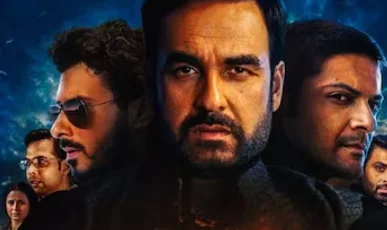
After three successful seasons on Prime Video, the Mirzapur franchise finally makes its theatrical debut with Mirzapur: The Movie.
Rather than continuing directly from Season 3, the film revisits the world during the events of the first season. Set in 2018, it functions as a parallel, previously untold chapter, allowing audiences to see several familiar characters together once again.
At the centre of the story is the battle for control of Mirzapur. Kaleen Bhaiya continues to sit at the top, while Munna's ambition and impulsive nature keep creating friction. Guddu and Bablu are also deeply involved in Kaleen's expanding operations.
A new threat arrives in the form of Babban Bhaiya, played by Ravi Kishan, who enters the power game with ambitions of his own. The resulting conflict brings together old rivalries, shifting loyalties and a familiar struggle for the throne.
The nostalgia is the film's biggest weapon
The strongest element of Mirzapur: The Movie is arguably not its story but the feeling of returning to a world audiences already know.
Munna Bhaiya is back. Guddu Pandit is back. Kaleen Bhaiya is back. The familiar attitude, dark humour, violence and power struggles are all present.
For longtime fans, watching these characters interact again provides much of the film's entertainment value. Divyenndu once again brings Munna's unpredictable energy, while Ali Fazal slips comfortably back into Guddu's aggressive and emotionally charged character.
The film clearly understands what its existing audience wants and delivers plenty of references, familiar mannerisms and moments designed to generate cheers inside the theatre.
Pankaj Tripathi remains the calm centre
Pankaj Tripathi once again proves why Kaleen Bhaiya became one of the franchise's defining characters.
He doesn't need excessive dialogue or exaggerated action to dominate a scene. His controlled expressions and restrained body language continue to give Kaleen Bhaiya an intimidating presence.
Ali Fazal also brings the physical intensity required for Guddu, while Divyenndu's return as Munna is likely to be one of the biggest attractions for franchise followers.
Jitendra Kumar takes over the role of Bablu Pandit, previously played by Vikrant Massey in the series. Rather than simply attempting to recreate Massey's interpretation, Kumar gives the character his own approach.
Ravi Kishan adds fresh energy
One of the more interesting additions to the film is Ravi Kishan as Babban Bhaiya.
His character brings a different personality into the established Mirzapur power structure. Kishan combines menace, swagger and humour, giving the film a fresh spark whenever he appears.
His presence is particularly useful because much of the film relies on characters and relationships audiences have already seen before.
Bigger action, bigger atmosphere
The move to the theatrical format does bring a noticeable increase in scale.
The action sequences are designed for the big screen, while the Rajasthan portions provide a visual change from the familiar Mirzapur setting. The background music, confrontations and violence retain the franchise's recognisable style while receiving a more cinematic treatment.
The film also retains the combination of crime, family conflict, humour, romance and betrayal that has traditionally defined the franchise.
Where the film struggles: Runtime and pacing
The biggest weakness is the screenplay's length.
With a runtime of approximately 197 minutes, the film runs for more than three hours. While the scale and character interactions initially make the length manageable, the narrative begins to feel stretched as it progresses.
The first half spends considerable time establishing relationships and revisiting elements familiar to longtime viewers. After the interval, the pace occasionally drops before the film gathers momentum again toward its climax.
The central problem is that the storytelling often resembles an extended OTT episode rather than a tightly constructed theatrical film.
A more aggressive edit could have removed some of the repetition and given the major confrontations greater impact.
Does it work for new viewers?
The movie is clearly made with existing fans in mind.
Viewers familiar with the series are likely to appreciate the returning characters, references, humour and emotional connections. However, newcomers may find some relationships and character dynamics difficult to fully appreciate without prior knowledge of the franchise.
The decision to place the story within Season 1's timeline makes the film relatively accessible in terms of chronology, but familiarity with the original series still adds considerably to the experience.
Final Verdict
Mirzapur: The Movie succeeds when it embraces what made the original series popular — powerful characters, memorable performances, dark humour, violence and the never-ending battle for power.
Its transition to the big screen works visually, and the returning cast provides enough energy to keep fans invested.
But the film also leans heavily on nostalgia. Instead of consistently offering something fresh, it often depends on the audience's emotional connection with characters they already know.
The result is an entertaining but uneven theatrical experience: bigger in scale, louder in execution and packed with fan service, but not always tighter in storytelling.
For Mirzapur loyalists, the return of these characters alone may make the ticket worthwhile. For everyone else, the long runtime could test their patience.
Overall: A crowd-pleasing return to a familiar world that delivers the bhaukaal, but could have benefited from a sharper edit.