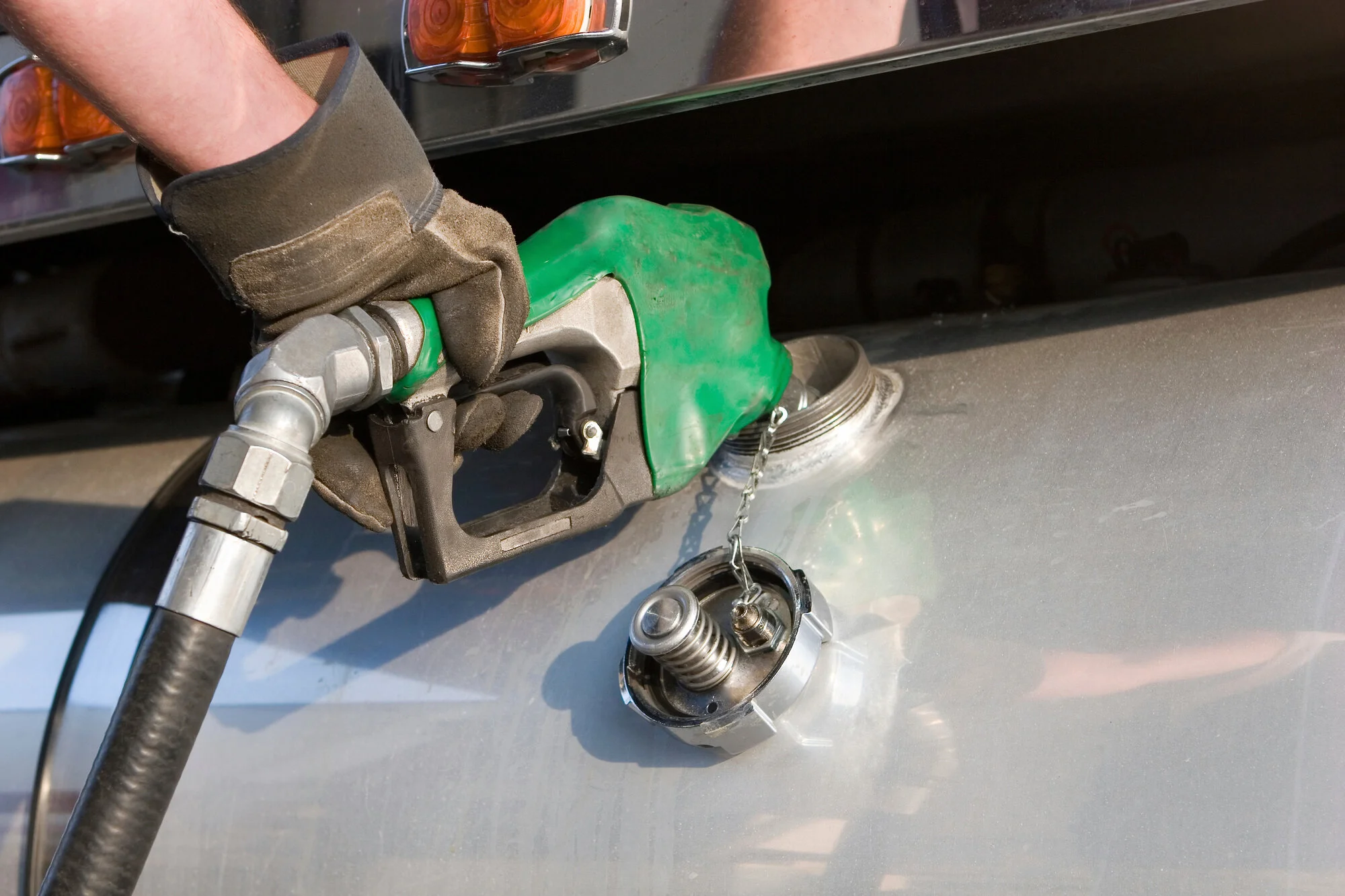
Diesel prices in the United States have surged to a record $5.85 per gallon, as the ongoing six-month war with Iran continues to disrupt global fuel supplies. The sharp increase is raising concerns about higher transportation costs and more expensive everyday goods. Diesel powers a large part of America’s freight and delivery network, including trucks, trains, ships and agricultural equipment.
Consumers could feel the impact most immediately at grocery stores. Fresh produce, meat, seafood and other perishable foods rely heavily on diesel-powered transportation and farm machinery. Experts warn that if diesel prices remain high, more of those costs could eventually be passed on to consumers.
The increase is already affecting online deliveries. Amazon introduced a temporary 3.5% fuel and logistics surcharge for some third-party sellers. UPS, FedEx and the U.S. Postal Service have also added certain fuel-related charges during the war.
Diesel prices are now nearly 56% higher than before the U.S. and Israel launched their war against Iran in late February, when the national average was around $3.76 a gallon.
The latest surge is closely linked to rising crude oil prices and disruptions in the Middle East. Much of the tanker traffic has been affected by bottlenecks around the Strait of Hormuz, a crucial route for global energy supplies.
Brent crude, the international oil benchmark, was trading at more than $95 a barrel on Friday, compared with roughly $70 before the war.
Gasoline prices are rising as well, although at a slower pace. The average price for regular gasoline has reached $4.15 a gallon, compared with $3.20 a year ago.
Experts say food prices could climb further if expensive diesel persists. Fuel accounts for an estimated 15% to 30% of the total cost of food, meaning prolonged fuel inflation could eventually translate into higher supermarket prices.
The impact is not limited to the U.S. Other countries, particularly in Africa and Asia, are also experiencing major increases in diesel prices due to their dependence on Middle Eastern energy imports.
The rising cost of fuel could also create political challenges for President Donald Trump ahead of the November midterm elections, as voters remain concerned about the economy and the cost of living.
With global fuel inventories under pressure and refining systems facing increasing strain, energy analysts warn that the current situation cannot continue indefinitely.