Yes, virgin coconut oil can be used for cooking, especially for low to medium-heat methods such as sautéing, light pan cooking, baking, roasting and traditional Indian recipes. Since it is minimally processed, it retains its natural coconut aroma and plant compounds. Use it in moderation as part of a balanced diet.
TL;DR – Can Virgin Coconut Oil Be Used for Cooking?
- Virgin Coconut Oil Can Be Used for Cooking: It is suitable for low to medium-heat methods like sautéing, baking, roasting, light pan cooking, and selected Indian recipes.
- It Has a Natural Coconut Flavour: Virgin coconut oil works best in dishes where coconut aroma fits, such as South Indian food, coastal recipes, curries, chutneys, rice dishes, and baking.
- Ayurveda Sees It as Cooling: Coconut oil is considered Sheeta, Snigdha, and nourishing, making it more suitable for Pitta balance, hot weather, and cooling meals.
- Use It in Moderation: It is calorie-dense and high in saturated fat, so small quantities are enough and it should not be the only oil used in every meal.
- Avoid Overheating: Choose edible, cold-pressed virgin coconut oil, store it properly, and avoid heating it until it smokes.
What Is Virgin Coconut Oil?
Virgin coconut oil is an unrefined oil extracted from fresh coconut meat or coconut milk. It is usually made through cold-pressed or minimal-heat methods, which helps preserve its natural flavour, aroma and quality.
Unlike refined coconut oil, virgin coconut oil has a clear coconut taste and smell. This makes it useful in recipes where a mild coconut note is welcome, such as vegetable stir-fries, South Indian dishes, curries, baked foods and tropical recipes.
Virgin coconut oil is also solid in cooler weather and liquid in warm weather. This is natural and does not mean the oil has gone bad.
What Nutrients Does Virgin Coconut Oil Provide?
Virgin coconut oil mainly provides dietary fat and calories. It contains medium-chain fatty acids, lauric acid and small amounts of naturally occurring plant compounds. However, it is also high in saturated fat, so it should be used in controlled portions.
|
Nutrient or Component |
Approximate Value or Role |
|
Calories |
About 120 calories per tablespoon |
|
Total fat |
About 14 g per tablespoon |
|
Saturated fat |
High, about 11 to 12 g per tablespoon |
|
Carbohydrates |
0 g |
|
Protein |
0 g |
|
Cholesterol |
0 mg |
|
Lauric acid |
Major fatty acid in coconut oil |
|
MCTs |
Present, but commercial coconut oil is not the same as pure MCT oil |
|
Natural antioxidants |
Present in small amounts, especially in virgin oil |
Virgin coconut oil is energy-dense. Even a small amount adds calories quickly, so one to two teaspoons may be enough for daily cooking depending on your diet and health goals.
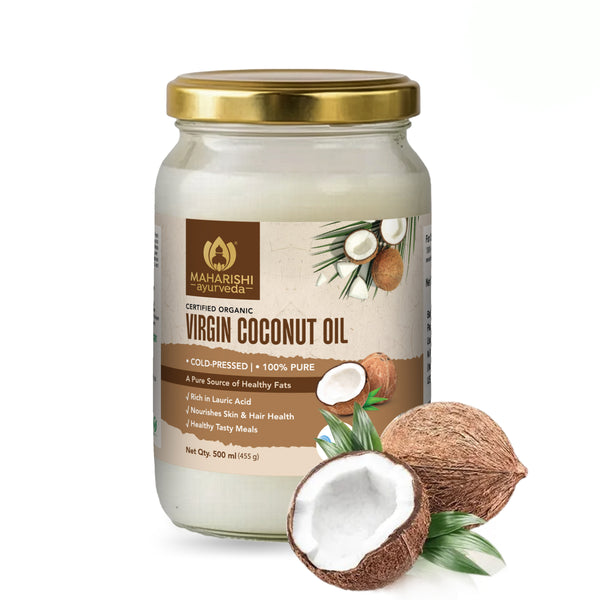
Virgin Coconut Oil: Traditional Support for Hair, Skin & Wellness
A pure, nourishing oil traditionally used to support healthy-looking skin, stronger hair, and everyday wellness routines
Buy Now
What Are the Benefits of Cooking With Virgin Coconut Oil?
Cooking with virgin coconut oil may help retain natural flavour, provide a stable fat for everyday cooking and add a pleasant aroma to suitable dishes. It is especially useful in recipes where coconut flavour complements the ingredients.
Helps Retain Natural Flavour
Virgin coconut oil has a mild, natural coconut taste. This can improve the flavour of curries, vegetable dishes, chutneys, baked foods and coastal recipes.
Suitable for Low to Medium-Heat Cooking
Virgin coconut oil can be used for sautéing, baking, roasting and light pan cooking. It is not the best choice for very high-heat deep frying because virgin coconut oil has a lower smoke point than refined coconut oil.
Contains Naturally Occurring Plant Compounds
Because virgin coconut oil is less processed, it may retain more natural plant compounds than highly refined oils. However, it should still be used in moderation.
Traditionally Used in Tropical Cuisines
Coconut oil is commonly used in tropical and coastal cuisines, especially in South India, Sri Lanka and Southeast Asia. It works well with spices, curry leaves, mustard seeds, lentils, rice, vegetables and coconut-based gravies.
Explore On : Virgin Coconut Oil: Benefits, uses, side effects, and more-->
What Does Ayurveda Say About Cooking With Virgin Coconut Oil?
In Ayurveda, coconut oil is considered cooling, nourishing and suitable for Pitta balance when used appropriately. It is often preferred in hot climates, summer routines and recipes where cooling food qualities are desired.
|
Ayurvedic View |
Virgin Coconut Oil |
|
Sanskrit name |
Narikela Taila |
|
Rasa |
Madhura, or sweet |
|
Virya |
Sheeta, or cooling |
|
Guna |
Snigdha, or unctuous |
|
Best suited for |
Pitta and Vata in moderation |
|
Use with caution |
Kapha imbalance, sluggish digestion, excess heaviness |
|
Best season |
Summer and hot weather |
|
Best cooking use |
Light, sattvik, cooling meals |
Ayurveda does not recommend one oil for everyone. Your cooking oil should match your prakriti, season, digestion, food habits and health needs.
Which Doshas Benefit Most From Virgin Coconut Oil?
Virgin coconut oil is most suitable for Pitta types because of its cooling nature. It may also support Vata when used in small quantities with warm, cooked foods. Kapha types should use it sparingly because it can feel heavy.
|
Dosha |
Suitability |
Practical Tip |
|
Vata |
Suitable in moderation |
Use with warm foods and spices |
|
Pitta |
Often suitable |
Good for cooling meals and hot weather |
|
Kapha |
Use cautiously |
Avoid excess, especially with heavy foods |
For Kapha imbalance, sesame oil, mustard oil or lighter cooking methods may sometimes be more suitable, depending on the person and season.
What Types of Cooking Can You Do With Virgin Coconut Oil?
Virgin coconut oil can be used in several everyday cooking methods, as long as the heat is not too high.
Sauteing
Use a small amount of virgin coconut oil to sauté vegetables, curry leaves, ginger, cumin, mustard seeds or light spices.
Stir-Frying
It works well for quick stir-fries with vegetables, tofu, paneer or sprouts. Keep the heat moderate and avoid burning the oil.
Roasting
You can lightly coat vegetables with virgin coconut oil before roasting. It adds flavour to sweet potato, pumpkin, carrots and other root vegetables.
Baking
Virgin coconut oil can be used in cakes, cookies, granola, muffins and other baked recipes. It may add a mild coconut flavour.
Light Pan Cooking
Use it for dosas, pancakes, cutlets, light tikkis or simple pan-cooked snacks where coconut flavour works well.
Traditional Indian Recipes
Virgin coconut oil is especially useful in South Indian-style recipes, vegetable thoran, avial, coconut curries, chutneys and rice dishes.
Are There Any Precautions When Cooking With Virgin Coconut Oil?
Yes, use virgin coconut oil in moderation, avoid overheating it, store it properly and choose food-grade, cold-pressed oil. Since it is high in saturated fat, it should not be the only oil used in every meal.
Use in Moderation
Virgin coconut oil is calorie-dense and high in saturated fat. Use small quantities and balance your diet with vegetables, pulses, whole grains, fruits, nuts and other healthy fats.
Avoid Overheating
Do not heat virgin coconut oil until it smokes. Smoking oil can affect taste and quality. For very high-heat cooking, choose an oil better suited to that temperature.
Store It Properly
Keep virgin coconut oil in a clean, dry, airtight container. Store it away from direct sunlight, heat and moisture.
Choose High-Quality Oil
Look for edible, cold-pressed virgin coconut oil from a trusted brand. Avoid cosmetic-grade coconut oil for cooking.
How Can You Add Virgin Coconut Oil to Daily Cooking?
You can add virgin coconut oil to daily cooking by using small amounts in breakfast dishes, vegetables, rice, baking and selected beverages. Start with recipes where coconut flavour naturally fits.
|
Meal Type |
How to Use Virgin Coconut Oil |
|
Breakfast |
Add to dosa, upma, pancakes or granola |
|
Vegetables |
Use for sautéed greens, beans or pumpkin |
|
Rice dishes |
Add to coconut rice or lemon rice |
|
Baking |
Replace part of butter or oil in suitable recipes |
|
Beverages |
Add a small amount to warm drinks if suitable |
|
Curries |
Use in coconut-based gravies |
|
Snacks |
Use for light pan-cooked vrat or sattvik snacks |
Do not add large quantities simply because it is natural. A little is enough.
How Do You Choose the Best Virgin Coconut Oil for Cooking?
Choose cold-pressed, edible-grade virgin coconut oil with a clean label, fresh aroma and proper packaging. The best coconut oil for cooking should be food-safe, minimally processed and free from artificial fragrance or additives.
Cold-Pressed vs Expeller-Pressed
Cold-pressed coconut oil is extracted without high heat and is often preferred when you want better flavour and minimal processing. Expeller-pressed oil may involve more heat but can still be suitable if it is food-grade and from a trusted source.
Organic vs Conventional
Organic virgin coconut oil may be preferred if you want a product made from coconuts grown without certain synthetic inputs. However, quality also depends on extraction, freshness, storage and brand transparency.
Label Reading Tips
Check for:
- Virgin or cold-pressed
- Edible or food-grade
- No artificial fragrance
- No hydrogenated oil
- No mineral oil
- No added preservatives
- Clear manufacturing and expiry dates
- Proper storage instructions
Avoid oils labelled only for hair, skin or massage when buying for cooking.
Virgin Coconut Oil vs Refined Coconut Oil for Cooking
Virgin coconut oil is less processed and has a natural coconut flavour. Refined coconut oil is more neutral in taste and usually has a higher smoke point. Choose based on the recipe and cooking temperature.
|
Factor |
Virgin Coconut Oil |
Refined Coconut Oil |
|
Processing |
Minimal |
More processed |
|
Flavour |
Coconut aroma |
Neutral |
|
Best use |
Low to medium heat |
Medium to higher heat |
|
Smoke point |
Lower |
Higher |
|
Ayurveda appeal |
More natural and traditional |
Less preferred for natural quality |
|
Best for |
Sautéing, baking, curries |
Neutral cooking and higher heat |
For Ayurvedic and natural cooking, virgin coconut oil is often preferred. For high-heat cooking, it may not always be the best option.
Explore More On : Cold-Pressed Virgin Coconut Oil vs Regular Coconut Oil: What’s the Difference?-->
Can Virgin Coconut Oil Be Used for Indian Cooking?
Yes, virgin coconut oil can be used for Indian cooking, especially South Indian, coastal and sattvik recipes. It works well with curry leaves, mustard seeds, coconut, lentils, vegetables and rice.
Good Indian cooking uses include:
- Coconut rice
- Avial
- Thoran
- Vegetable stir-fries
- Sattvik khichdi variations
- Dosa or appam greasing
- Light tadka
- Coconut-based curries
- Fasting recipes
If you do not like coconut flavour in North Indian dishes, use it selectively.
Final Takeaway
Virgin coconut oil can be used for cooking, especially for low to medium-heat recipes, sautéing, baking, roasting, light pan cooking and traditional Indian dishes. It offers natural coconut flavour and fits well into Ayurvedic cooking, especially for Pitta-supportive and cooling meals.
Use it in moderation because it is high in calories and saturated fat. Choose cold-pressed, edible-grade virgin coconut oil, avoid overheating it and store it properly.
For best results, use virgin coconut oil as one part of a balanced kitchen routine, along with fresh foods, suitable spices, seasonal eating and mindful portion control.
Virgin Coconut Oil: Traditional Support for Hair, Skin & Wellness
A pure, nourishing oil traditionally used to support healthy-looking skin, stronger hair, and everyday wellness routines
Buy Now